Who Is Portuguese?
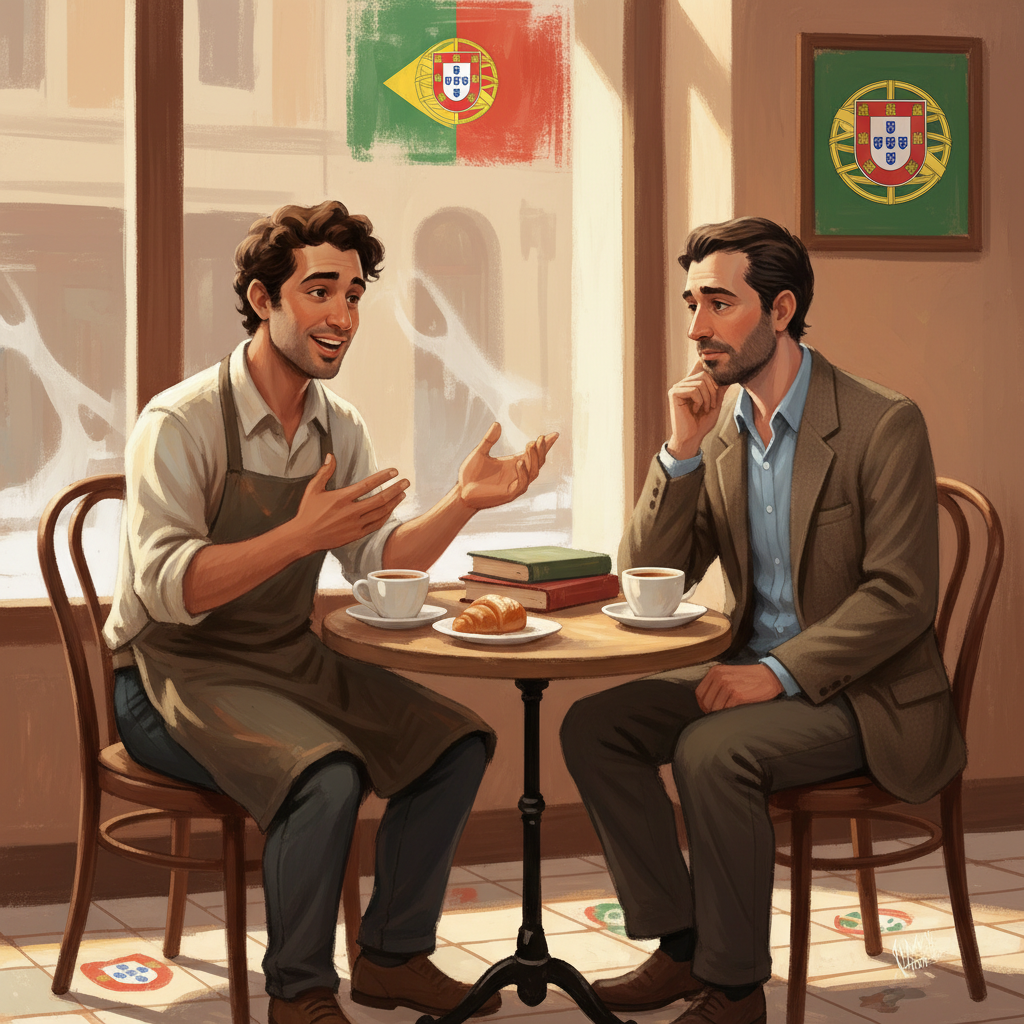
António: The bacalhau was excellent. My compliments.
João: smiles Thank you. I didn't cook it—Chef Tiago did—but I'll pass it on.
António: Your accent... Brazilian?
João: Yes. From São Paulo originally. Ten years in Portugal now.
António: Long time. You like it here?
João: careful I do. It's home now. My son was born here. I have more years in Lisbon than I had in São Paulo.
António: But still "Brazilian."
João: pause To some people, always. No matter how long I stay.
António: shifts uncomfortably I didn't mean—
João: I know. You were making conversation. But that question—where are you from, really—we hear it differently. It can be curiosity. It can also be a test.
António: A test of what?
João: Of whether we belong. Whether we're visitors or residents. Guests or neighbors.
António: considers I never thought about it that way. For me, asking where someone's from is just... small talk. Learning about people.
João: For Portuguese people asking Portuguese people, yes. For Portuguese people asking immigrants, it's more complicated. Especially now, with all the political talk about "too many foreigners."
António: carefully There has been a lot of change. Quickly. When I was growing up, Porto was... very Portuguese. Now walking around Lisbon, I hear more Brazilian than Portuguese sometimes.
João: Does that bother you?
António: honest I don't know. Part of me... yes, a little. It feels different. Like the country I knew is changing into something I don't recognize.
João: I understand that. When I go back to São Paulo, I feel the same—things have changed, people have changed. Home becomes unfamiliar.
António: So you understand.
João: I understand the feeling. But the response to the feeling—that's where we might differ. Your discomfort can become my exclusion.
António: I'm not excluding you. I'm just... observing change.
João: And when observation becomes policy? When the party that says "too many Brazilians" gains power? My son's future depends on how the country processes that discomfort.
António: quiet I don't vote for Chega. I want you to know that.
João: But many do. And even those who don't—the background feeling that Brazil is invading, that Portuguese identity is threatened, that people like me are the problem—it creates an atmosphere. My son feels it. I feel it.
António: What do you want me to do? Pretend I don't notice change?
João: No. But maybe... notice who we are, not just that we're here. I work six days a week. I pay taxes. My son speaks Portuguese better than he speaks anything else. I cook bacalhau that you said was excellent. Am I part of Portugal or not?
António: long pause When you put it that way... of course you are. You've earned it.
João: "Earned it." See, that's the thing. Portuguese people don't have to earn belonging. They just have it. I have to earn it, continuously, by proving I'm not a threat. Prove I work. Prove I integrate. Prove I'm "one of the good ones."
António: Isn't that true everywhere? Don't immigrants everywhere have to... adapt?
João: Adapt, yes. Continuously prove worthiness? Only in places where we're not really welcome. When will I have proven enough? When will my son?
António: genuinely uncertain I don't have an answer. I want to say—you're welcome here, you've contributed, you belong. But I can't speak for Portugal. I can only speak for myself.
João: That's more than many say. stands to return to work Thank you for the conversation. Most customers just eat and leave.
António: Thank you for your honesty. pause I'll think about what you said. About proving. About belonging.
João: That's all I ask. Think about it. And maybe, when someone asks if there are too many Brazilians, ask back—too many for what? returns to work
Padrões Transversais
Outras Conversas

Explorar Futuros
"The Portugal of True Portuguese"
André Ventura
Ver este futuro"The Workers' Portugal"
António Filipe
Ver este futuro"The Social European Project"
António José Seguro
Ver este futuro"The Democracy of Care"
Catarina Martins
Ver este futuro"The Technocratic Renewal"
Henrique Gouveia e Melo
Ver este futuro"The Liberal Leap"
João Cotrim Figueiredo
Ver este futuro"The Stable Continuity"
Luís Marques Mendes
Ver este futuro