Generational Divide
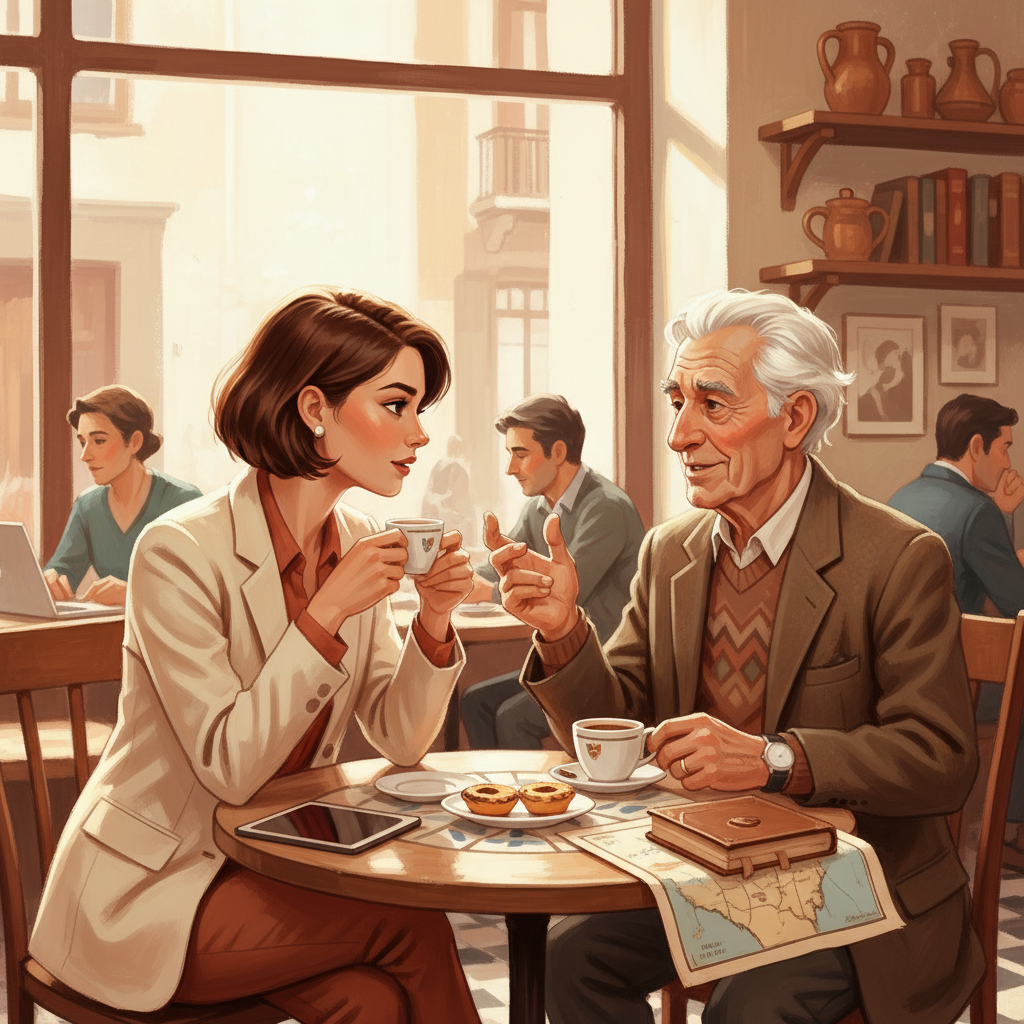
Who participates in this conversation
João: Your mother says you're thinking about leaving. Netherlands, was it?
Sofia: Maybe. There's an offer. Better salary—much better. But I haven't decided.
João: pours them both wine When I was your age, leaving wasn't really an option. You stayed, you worked, you built something. Why is everyone running away now?
Sofia: sighs It's not running away. It's... searches ...the math doesn't work here, tio-avô. I earn €1,400 a month. A studio apartment in Lisbon costs €900. The Amsterdam offer is €5,000. I could actually live, not just survive.
João: When I started at the hotel, I earned almost nothing. Your grandmother and I shared one room for five years. We saved. We built. Now we have this house, a pension, a life.
Sofia: In fifty years. I respect that. But property cost five years of salary then. Now it costs fifteen years, twenty years. The formula that worked for your generation is broken for mine.
João: So you work harder. You sacrifice more. This generation wants everything immediately—the apartment, the car, the lifestyle. You're not willing to wait.
Sofia: controlled frustration I've been "waiting" for six years since university. Living with my parents. No savings. No independence. How long should I wait? Ten more years? Twenty?
João: pause It's that bad?
Sofia: Yes. My whole cohort is like this. Half are abroad already. The half that stayed either have family money or have given up on having our own homes before forty.
João: The news says the economy is growing. Employment is up.
Sofia: Unemployment is low because everyone who can leave has left. The jobs that exist pay poverty wages—unless you're in tech, finance, consulting. And even then, half of European average. We're employed, tio-avô. We're just not paid.
João: drinks wine In my day, there was the dictatorship, the revolution, the chaos. Then Europe. Things got better, slowly. Maybe they'll get better for you too.
Sofia: Or maybe we'll be the first generation worse off than our parents. That's the research, you know. Millennials, Gen Z—we have less wealth, less security, fewer prospects than boomers at the same age. The trend is backwards.
João: uncomfortable I didn't make these policies. I worked, paid taxes, raised children who paid taxes. Why is it my generation's fault?
Sofia: It's not personal fault. But the policies that made your life possible—social housing, public investment, pensions you could live on—were dismantled. And now when we ask for similar support, we're told to "work harder" and "sacrifice more."
João: We sacrificed plenty.
Sofia: I know. But did you have to choose between living in your country and having a future? Because that's my choice. Stay and struggle, or leave and lose... voice catches ...lose home. Lose family. Lose belonging.
João: softer You don't want to go.
Sofia: No. I love Portugal. I love Lisbon. I love coming here, seeing you, speaking Portuguese. The Netherlands... it's just work. It's money. It's not home. But home can't feed me.
João: long silence When your grandfather died, I promised to look after the family. I thought that meant stability. Safety. But maybe it meant something I couldn't give—a Portugal where you could stay.
Sofia: You couldn't have changed it. One person can't.
João: But my generation could have. We voted for people who made promises and didn't deliver. We looked the other way when the corruption happened. We let the young become... searches ...export products.
Sofia: tearful I don't blame you, tio-avô. I just wish it were different.
João: reaches for her hand If you go, come back for Christmas. Always. Promise me.
Sofia: nods I promise.
João: And maybe... maybe things will change. Someone will fix it. And you'll come home.
Sofia: Maybe. wipes eyes But I can't wait for maybe. I need to live now.
Cross-cutting Patterns
Explore Futures
"The Portugal of True Portuguese"
André Ventura
"The Workers' Portugal"
António Filipe
"The Social European Project"
António José Seguro
"The Democracy of Care"
Catarina Martins
"The Technocratic Renewal"
Henrique Gouveia e Melo
"The Liberal Leap"
João Cotrim Figueiredo
"The Stable Continuity"
Luís Marques Mendes