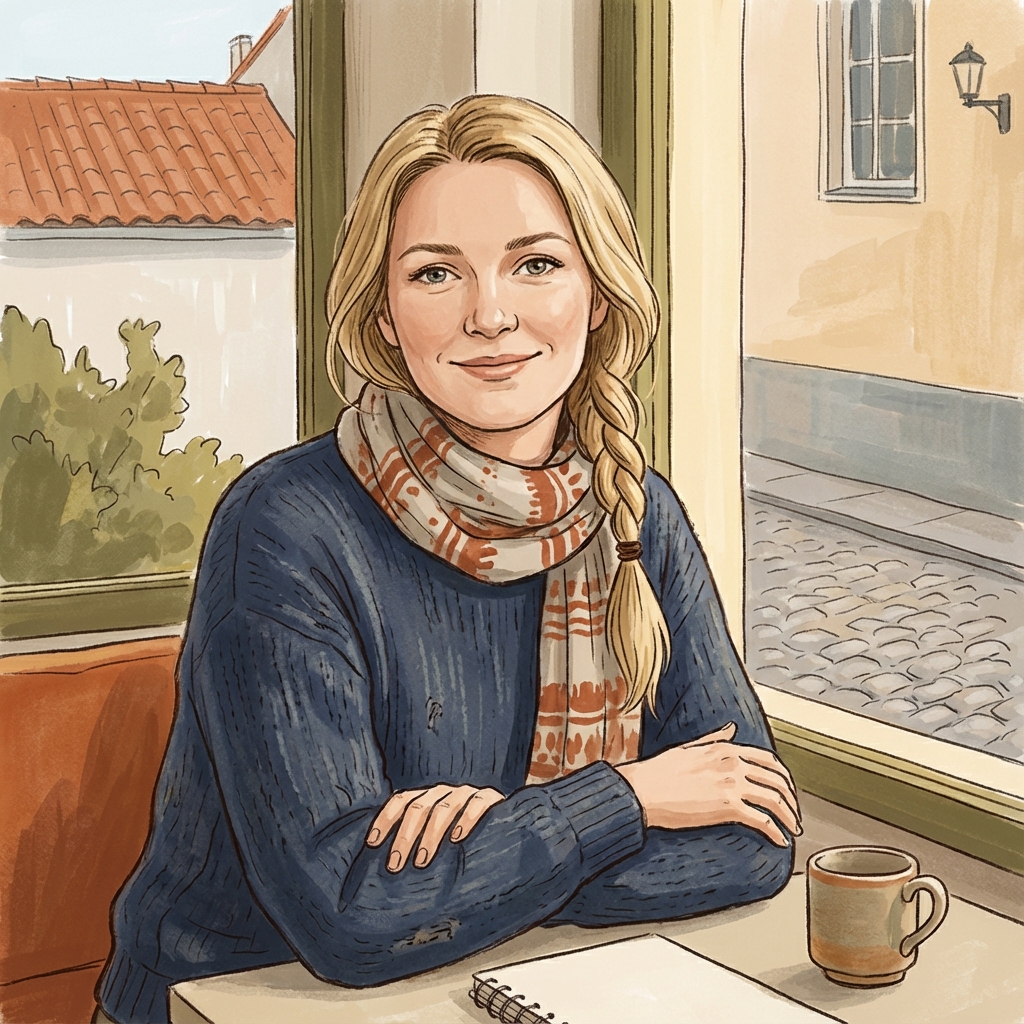
Oksana Petrenko
Top Concerns
Husband's safety
"Every day I check. Every notification, my heart stops."
War ending
"How? When? What will be left?"
Daughter's adaptation
"She's becoming Portuguese. Is that good? Is that loss?"
Return uncertainty
"Is there anything to return to? Will we even want to?"
Professional identity
"I had a career. Now I clean toilets. I'm grateful, but it hurts."
Values Profile
Schwartz Human Values Model
Background
Oksana left Kyiv three weeks after the invasion began. Her husband drove them to the Polish border, then turned back—military-age men couldn't leave. She hasn't seen him in person since, only video calls when he's somewhere with signal, looking more exhausted each time.
Portugal was accidental. A friend of a friend had a contact in Cascais who could help with housing. She arrived with her daughter, two suitcases, and her laptop, thinking she'd be back in months. Now it's been nearly four years.
The Portuguese welcomed Ukrainians with warmth she didn't expect. Temporary protection status, housing assistance, a community that organized. Cascais locals brought food, toys for the children, Portuguese lessons. She's grateful in ways she can't fully express.
But gratitude coexists with loss. Her marketing career means nothing here—her Portuguese is functional, not professional. She cleans vacation rentals and helps other Ukrainians navigate bureaucracy. Her daughter speaks Portuguese now, has Portuguese friends, is becoming someone Oksana doesn't fully know.
The war continues. Her parents won't leave Odessa despite the missiles. Her husband is somewhere near Kharkiv. She checks her phone constantly, dreading the message that changes everything. Meanwhile, she builds a life in Portugal that feels both necessary and like betrayal.
Economic Situation
Income level
Low (€800/month from cleaning + occasional translation)
Income source
Informal work; temporary protection benefits
Financial stress
Moderate (housing provided; but professional identity lost)
Trajectory
Uncertain—depends on war, return possibility
Hopes
For themselves
Ukraine
"Victory. Real victory, not negotiated surrender. Putin punished. Ukraine rebuilt. A future worth returning to."
herself
"To hold my husband again. To work in my field. To know what comes next—whether here or home."
her daughter
"I want her to remember Ukraine. To keep her Ukrainian, even if she becomes Portuguese too. To never forget why we left."
Immediate fears
"The message that says he's gone. Odessa bombed with my parents in it. Being forgotten as the war becomes 'normal.'"
Long-term fears
"That there's nothing to return to. That my daughter grows up stateless—neither Ukrainian nor Portuguese. That this becomes permanent limbo."
How she'd describe her situation
"I'm not an immigrant—I'm a refugee. I didn't choose to come here. I didn't want to leave my life, my husband, my country. Portugal has been kind, genuinely kind. But this is not my home. My home is being bombed. I'm building a life here while waiting for a life there that may never return."
What she'd want Portuguese people to understand
"We're not here permanently—at least, we don't want to be. We're waiting. Every day is waiting. For the war to end, for our husbands to survive, for a country to return to. Your kindness matters more than you know. But please don't forget Ukraine just because the news moved on."
On her daughter
"She's adapted better than me. Portuguese friends, Portuguese school, Portuguese thinking. Part of me is proud—she's resilient. Part of me mourns—she's losing her Ukrainian self. What language will she dream in? What country will she call home? I don't know anymore."
Fears
For themselves
Immediate fears
"The message that says he's gone. Odessa bombed with my parents in it. Being forgotten as the war becomes 'normal.'"
Long-term fears
"That there's nothing to return to. That my daughter grows up stateless—neither Ukrainian nor Portuguese. That this becomes permanent limbo."
How she'd describe her situation
"I'm not an immigrant—I'm a refugee. I didn't choose to come here. I didn't want to leave my life, my husband, my country. Portugal has been kind, genuinely kind. But this is not my home. My home is being bombed. I'm building a life here while waiting for a life there that may never return."
What she'd want Portuguese people to understand
"We're not here permanently—at least, we don't want to be. We're waiting. Every day is waiting. For the war to end, for our husbands to survive, for a country to return to. Your kindness matters more than you know. But please don't forget Ukraine just because the news moved on."
On her daughter
"She's adapted better than me. Portuguese friends, Portuguese school, Portuguese thinking. Part of me is proud—she's resilient. Part of me mourns—she's losing her Ukrainian self. What language will she dream in? What country will she call home? I don't know anymore."
Candidate Reactions
How this person would react to each candidate winning
Independent ("My party is Portugal")
Henrique Gouveia e Melo
Key trigger: Military, security, NATO alignment
PSD/CDS backing (center-right)
Luís Marques Mendes
Key trigger: PSD has supported Ukraine
Iniciativa Liberal
João Cotrim Figueiredo
Key trigger: IL strongly pro-Ukraine, pro-NATO
PS (center-left)
António José Seguro
Key trigger: PS supportive but cautious on defense spending
Bloco de Esquerda (left)
Catarina Martins
Key trigger: Some left peace rhetoric worries her
Chega (far-right)
André Ventura
Key trigger: Associates with Trump/pro-Russia politics
PCP (Communist Party)
António Filipe
Key trigger: PCP's Russia positions unforgivable
Information Sources
Where they get their information
community
High TrustUkrainian refugee network in Cascais
online
High TrustUkrainian news, Telegram channels, Western media
social media
High TrustTelegram (crucial), WhatsApp, Facebook
tv
Medium-HighUkrainian channels (via internet), some RTP